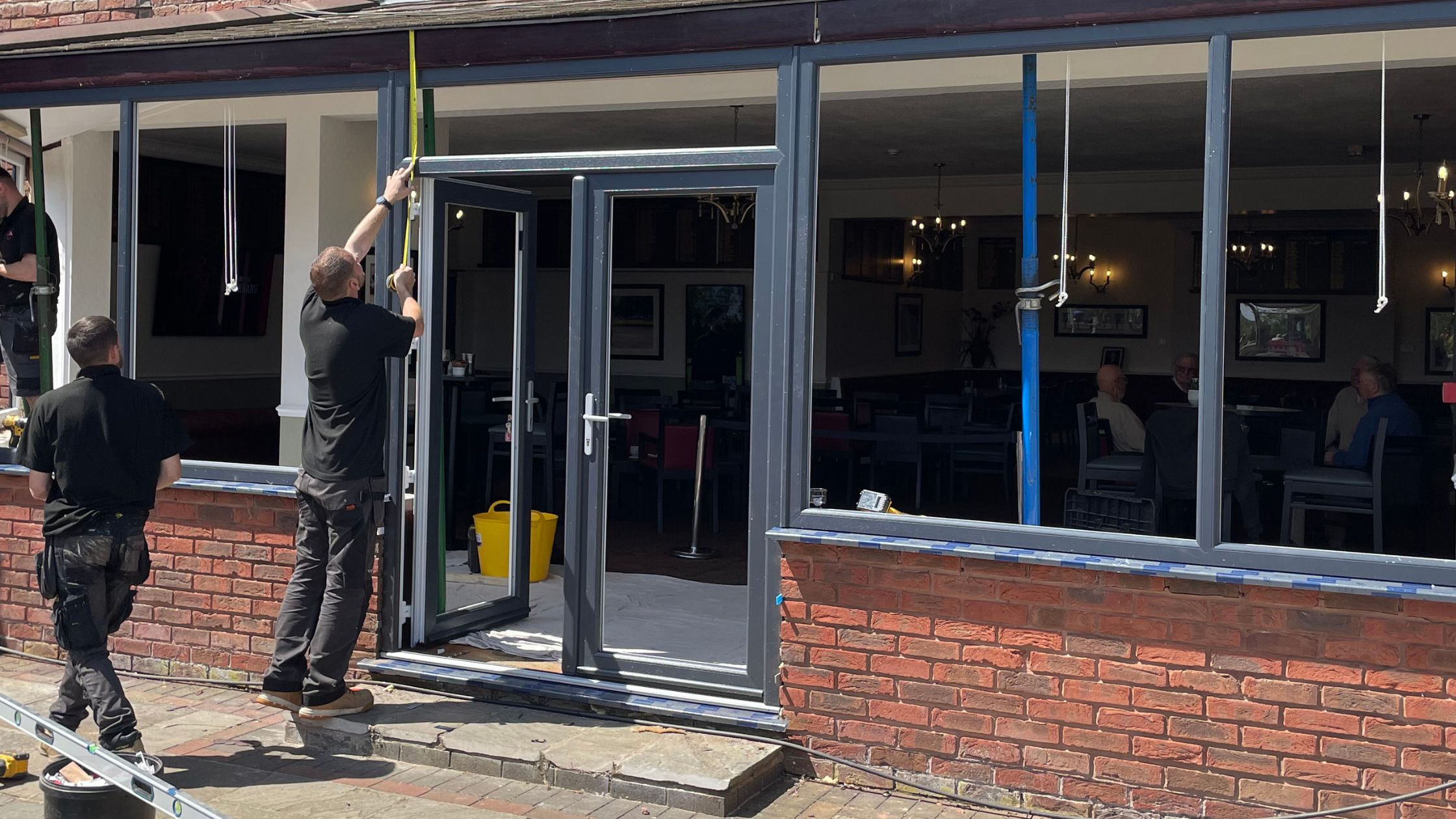
Aluminium doors are a popular choice for modern homes, offering slim frames, a contemporary finish and plenty of natural light. But while they bring lots of benefits, they also need careful planning when it comes to ordering, delivery and installation.
Unlike UPVC doors, aluminium frames are less forgiving of mistakes. Scratches, dents and fitting errors can be difficult or impossible to put right without replacing the affected component. That makes choosing the right installer and coordinating your building work particularly important. If you’re planning a renovation, self-build or new extension, here’s what to consider before ordering your aluminium doors.
When should aluminium doors be installed?
The good news is that aluminium door installation follows much the same sequence as UPVC. Doors and windows are fitted before rendering and plastering, allowing the surrounding walls to be finished neatly around the frames. However, the trades working afterwards need to take extra care. A knock from a tool, a stray piece of grit or an accidental scrape from building materials can leave permanent damage to the powder-coated finish.
Make sure your builder, plasterers and renderers know that aluminium has been installed and needs protecting throughout the remaining work. Keeping protective coverings in place for as long as practical can help prevent avoidable damage.
Aluminium door lead times
Aluminium doors generally take longer to manufacture than standard UPVC products. They’re also less likely to be held in stock because they are typically made to order. For homeowners and project managers, this means aluminium doors need to be factored into the building schedule early. Waiting until the opening is ready before placing an order could delay other work, particularly if the doors are needed to make the property watertight.
Installation can also take slightly longer. A fitter who might comfortably install four or five uPVC windows in a day may complete only three or four aluminium windows in the same time, depending on the products and project. It’s a good idea to tell your builder about your choice of aluminium doors as early as possible. Allowing for both manufacturing lead times and a more careful installation process helps keep the rest of your project on track.
Why aluminium doors shouldn’t be left on site
It might seem sensible to have your doors delivered well ahead of installation, but leaving aluminium frames sitting around on a building site can create unnecessary risks. Storage and handling can cause scratches or dents, particularly when multiple trades are working in the same space. If a frame is damaged before installation, it can also be difficult to establish when or how it happened. Unlike some UPVC products, damaged aluminium frames cannot simply be buffed back into shape. Replacing a frame may mean waiting several more weeks for a remake and paying the associated costs again.
Where possible, schedule delivery as close to the installation date as you can, ideally so the doors can be fitted shortly after arrival. When your delivery arrives, inspect the frames carefully, photograph their condition and report any visible damage immediately. This gives everyone a clear record and helps avoid disputes later.
Choosing the right aluminium door installer
The quality of the installation matters just as much as the quality of the doors themselves. Aluminium offers excellent performance and a smart finish, but only when it has been measured and fitted correctly.
With UPVC, there may be more scope to make adjustments or use replacement trims to resolve minor issues. Aluminium offers less room for error, meaning a dented frame, scratched finish or incorrectly aligned door can be expensive to put right, potentially requiring a replacement rather than a simple repair.
Before choosing an installer, ask about their experience with aluminium doors specifically. Fitting uPVC doors or aluminium windows does not automatically mean someone has the right experience to handle every aluminium door system.
A thorough survey is essential, too. This should include checking the opening and taking diagonal measurements, rather than relying on a quick measurement across the width and height. Getting this right from the outset reduces the risk of alignment problems and costly delays. Look for a supplier that takes responsibility for accurate surveying, careful handling and professional installation. Taking a little extra time at each stage can make a significant difference to the finished result.
Aluminium door installation
On installation day, small details are really important. Fitters should wear suitable protective gloves when handling aluminium frames, as even careless contact can mark the finish. The opening should also be clean and free from dust, grit and debris before the frame is positioned.
The good news is that installing aluminium doors doesn’t necessarily require a completely different set of fixings. Many systems use familiar fixtures, fittings, screws and beading, much like their UPVC counterparts.
Frames are commonly delivered unglazed, with the glass fitted on site. Internal glazing beads are removed to allow the glass to be positioned from inside the property, before the beads are refitted to hold it securely in place. Many modern domestic systems use pressure glazing, although some older systems require wedge gasketing. The exact process depends on the door system, so your installer should always follow the manufacturer’s instructions.
Do aluminium doors need special weatherproofing?
Weatherproofing is an important part of any external door installation. A well-fitted aluminium door should be installed with the appropriate seals, drainage provisions and perimeter sealing for the specific system and opening.
The threshold deserves particular attention. Its design needs to suit the intended access, the surrounding floor levels and the way rainwater will drain away from the property. Getting these details right helps reduce the risk of water ingress and draughts. Because threshold and sealing requirements vary between products and building designs, discuss them with your supplier before ordering. Your installer should confirm the correct preparation and installation details for your chosen door, rather than relying on a one-size-fits-all approach.
Get your aluminium door installation right first time
Aluminium doors can be an excellent investment, but careful planning is essential. Order early, coordinate delivery with your installer, protect the frames on site and choose a fitter with proven experience of aluminium systems. At Birmingham Glass, we can help you find the right windows and doors for your project.
Take a look at our aluminium doors or contact Birmingham Glass to discuss your requirements and get your project off to the right start.